The Tik Tok lie; Why Your Street Portrait Isn't Street Photography
Go on TikTok or Instagram right now and search for #streetphotography. You’ll see a very specific type of video: a photographer walks up to a stranger, asks to take their photo, directs them to pose, and then shows a "POV" shot of the result.
It gets millions of views. It looks cool. But let’s be honest: it’s not street photography.
The "Real" vs. The "Directed"
In my street photography workshops here in Brussels, this is often the first big realization my students have. They come in thinking that "street" just means "outside."
But there is a fundamental line in the sand.
For me, street photography can absolutely be an empty alleyway or a shadow on a wall—it doesn't need people. But if people are in the frame, they must be 100% unposed. The second you interact with the subject, the second they know they are being "portrayed," the chemistry changes. You’ve moved from being an observer of life to a director of a scene.
That’s fine—it’s just a different genre. It’s a street portrait. It’s reportage. It’s documentary. But it’s not that raw, lightning-in-a-bottle moment that defines the true street photographer.

The Real
Street photography should be showing this world 100% unposed.
Style is not the same as Substance
I see this all the time at festivals and in galleries: a series of photos that looks like street photography. They use the high contrast, the deep blacks, the intense colors, and the strange angles we associate with the genre.
But you can tell. You can see it in the subject's eyes or the tension in their shoulders. They know they are being photographed.
This is what I call "Street Style Reportage." It uses the visual language of the street to tell a planned story. It’s a valid way to work, but it lacks the one thing that makes street photography addictive: The Magic of the Real.
Playing with Luck and Persistence
Real street photography is a game you play with time, light, and coincidence.
When I’m out in Brussels with my camera, I’m not looking for people to pose for me. I’m looking for the intersection of luck and persistence. I’m waiting for that one-thousandth of a second where the light hits a pedestrian’s coat at the exact moment a bus pass by and a shadow falls across a doorway.
That is a moment that can never be recreated. You can’t "direct" that. You have to earn it by being there, by staying persistent, and by knowing your angles so well that you’re ready when the universe decides to hand you a gift.
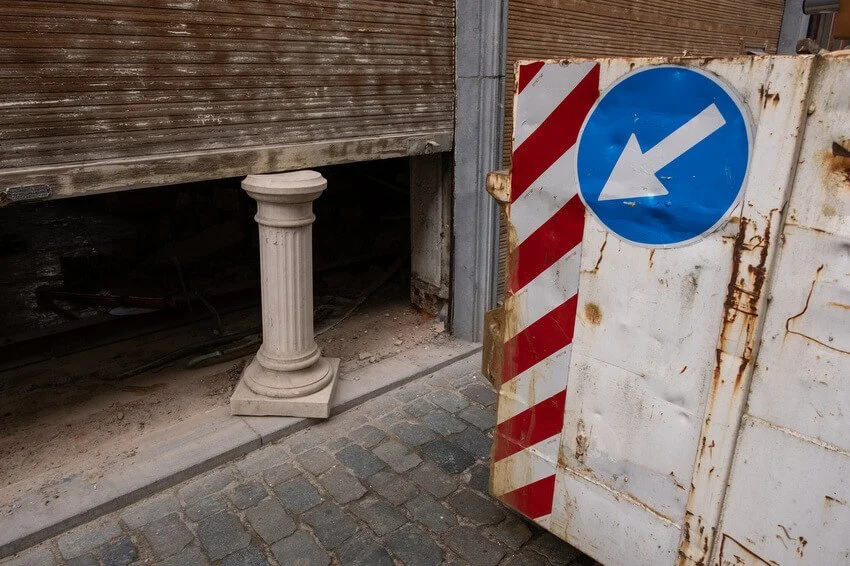
Walk, Walk, Walk
Finding those treasures in the streets.
Why it Matters
My students usually start out not knowing the difference. But after a few lessons, they start to feel it. They realize that a "lucky" shot they spent two hours walking for feels ten times more rewarding than a "cool" shot they asked someone to pose for.
In 2026, when AI can generate a "perfect" street scene in three seconds, the value of the "Real" is going up. People can smell a setup. They can sense when a moment is manufactured. Even for history's sake it is important to stay shooting those streets. It all changes fast, so catch the world as it is right now in that frame.
True street photography is an honest record of the world as it is—unfiltered, unposed, and unpredictable. That’s why we do it. That’s why it’s hard. And that’s why it matters.
Want to learn how to find the "Real" yourself? Join me for my next Street Photography Workshop in Brussels, Venice, Amsterdam or Paris.