
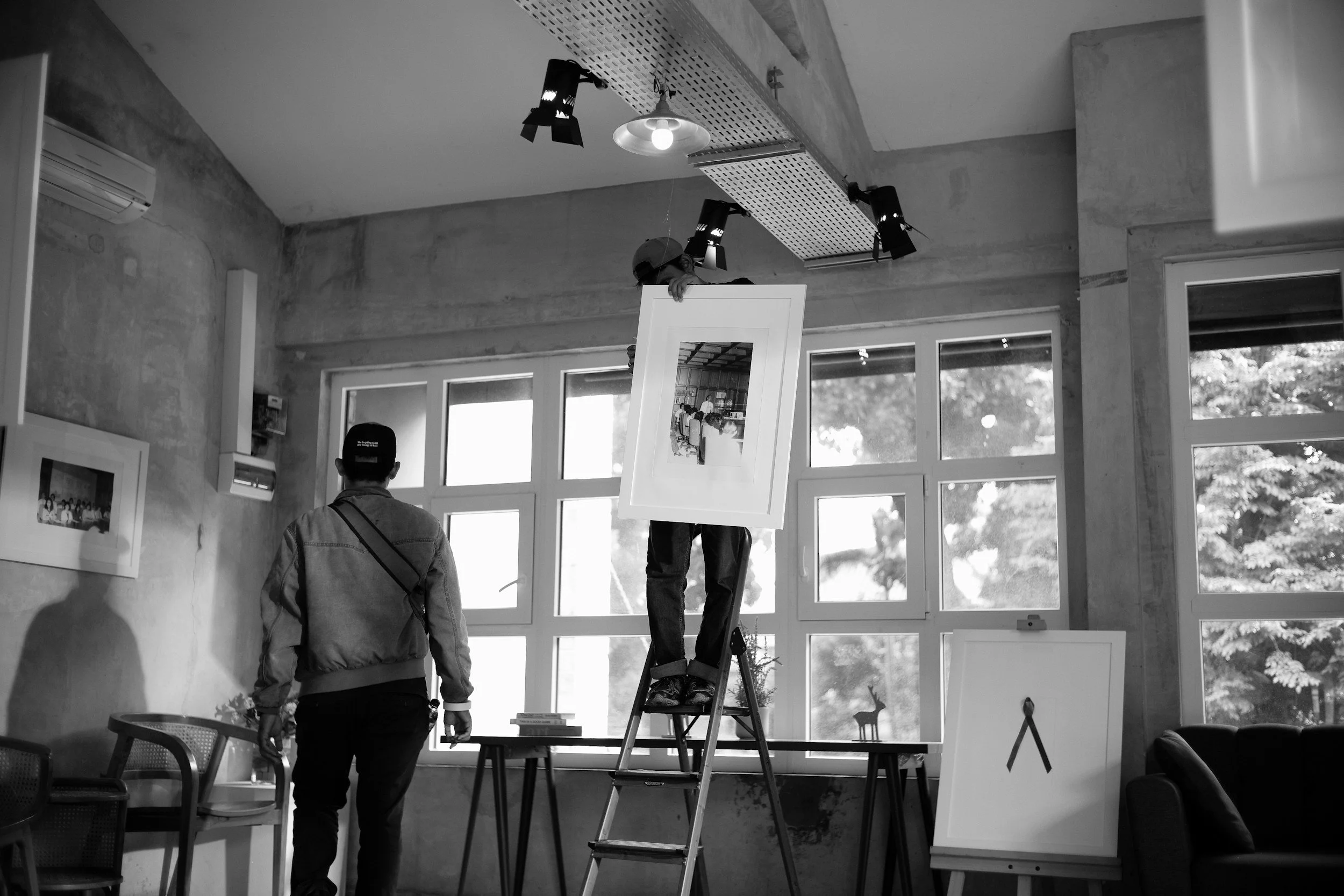
Photography of your art; paintings, drawings, sculptures
Photographing artworks is deceptively tricky: paintings demand precise control of reflections, colour fidelity and perspective, so every decision from lighting angle to lens choice alters the image’s character.
Artwork photography, doing it yourself
Yes, of course you can do it yourself. You as a painter or any artist should be doing the reproduction of your art yourself. Make a setting at your studio with a pro camera, fixed lens, fixed aperture and fixed neutral lighting so you can shoot your own art any time. Here’s how!
Place the artwork on a neutral, non-reflective background and position it perpendicular to your camera to avoid keystoning; natural, diffused light from a large north-facing window or a softbox at 45° will give even illumination without harsh hotspots. Use a tripod and a remote release or timer to keep the camera steady, set your camera to the lowest practical ISO and shoot in RAW for maximum detail, choose an aperture between f/5.6–f/11 to balance sharpness and depth, and focus carefully on the artwork’s plane; if the piece is framed behind glass, remove reflections by angling the glass or using a polarising filter and flagging unwanted light. Take a colour target or grey card in the first frame for accurate white balance and colour correction in post, bracket exposures to ensure highlight and shadow detail, and capture both full-frame shots and close-up detail images to show texture and brushwork. Finally, crop and straighten in post while keeping the aspect ratio true to the original, and save master files in a high-resolution, uncompressed format for archival use.
For more info I recommend this article.
Hire a professional photographer to shoot your art, at your studio or gallery
Specular highlights can obliterate brushwork, incorrect white balance warps pigment relationships, and uneven lighting reveals or conceals texture unpredictably — so I often work with polarising filters, soft directional sources and colour-calibrated targets to preserve tonal subtleties. Framing and parallax matter too; to avoid keystone distortion I shoot with the camera plane parallel to the painting, frequently using a tripod and tilt-shift or a long lens, then refine geometry in post without losing sharpness. The result should feel faithful yet alive, capturing not just the picture but the material presence of paint, craquelure and varnish — which is why good art reproduction is as much craft as it is technical problem-solving.
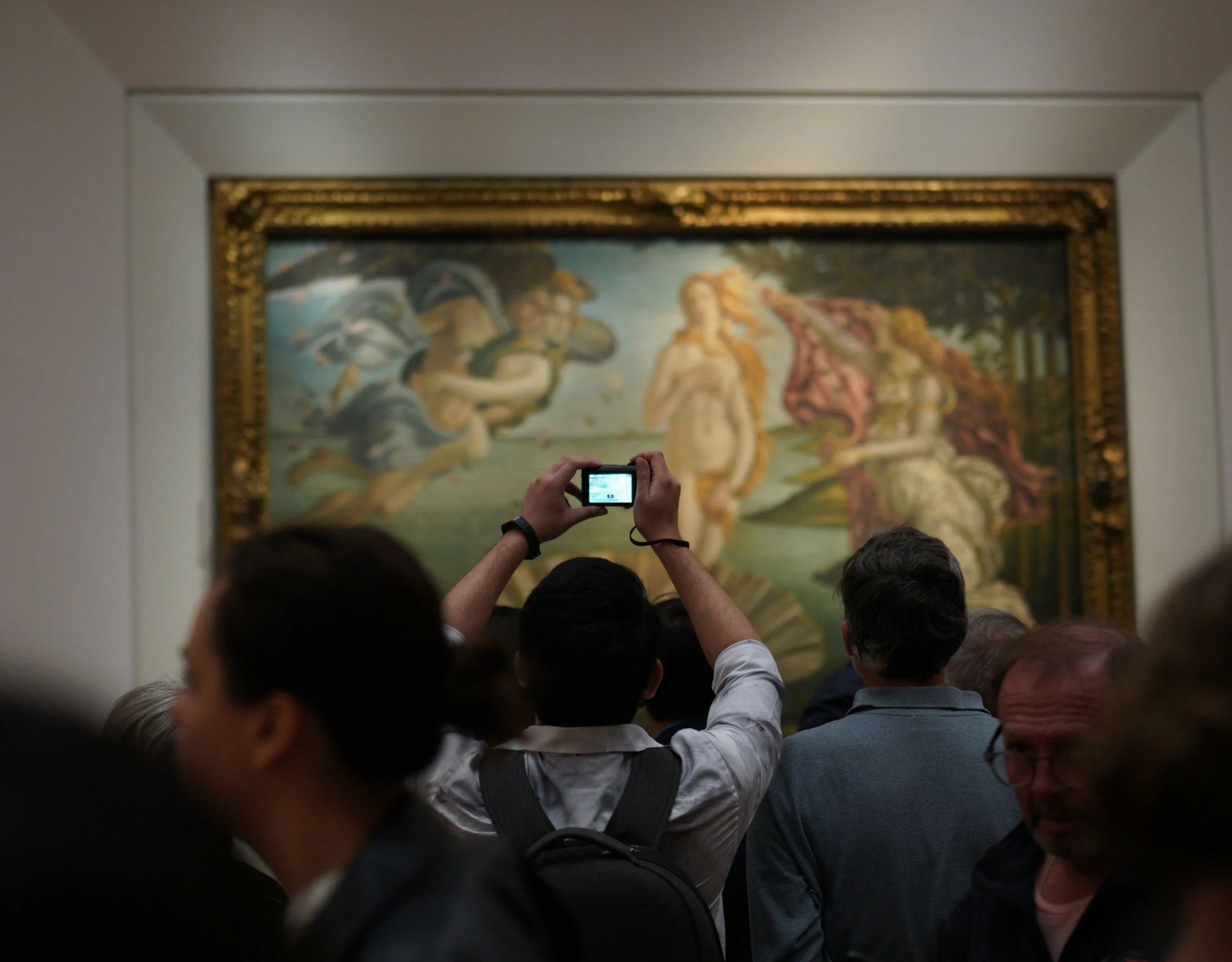
Art reproductions, details
Professional art reproductions by Sander de Wilde bring artworks to life with faithful colour, fine detail and archival permanence. Whether you need museum-grade reproductions for catalogues, gallery prints for limited editions, or high-resolution images for online collections, Sander combines technical mastery with a playful eye to capture texture, brushwork and surface nuance exactly as the artist intended.
Using calibrated lighting, medium- and large-format capture, and meticulous colour management, each reproduction is edited to match original tones and subtleties while preserving scale and perspective. Outputs include ICC-profiled TIFFs for print, exhibition-ready giclée prints on archival papers and canvas, and custom cropping or retouching to suit framing and display.
Ideal for artists, galleries, museums and collectors who demand precision and care, these reproductions protect your work’s integrity and extend its reach without compromise. Commission a session to get reliable, museum-quality images that honour the original and stand the test of time.
Photography of your art; paintings, drawings, sculptures and performances is my passion.