Explore Peter Hujar Through the Lens of Cinema
Review by this portrait photographer on a movie about another portrait photographer…
Let me be honest: a film that is essentially one long conversation in a single room should, by all my usual standards, put me straight to sleep. I am not the patient type. But Peter Hujar's Day had me from the first frame. It is beautiful, precise, and -- for anyone who has ever stood behind a camera -- absolutely gripping.
Portraits Are Made Before the Camera Rises
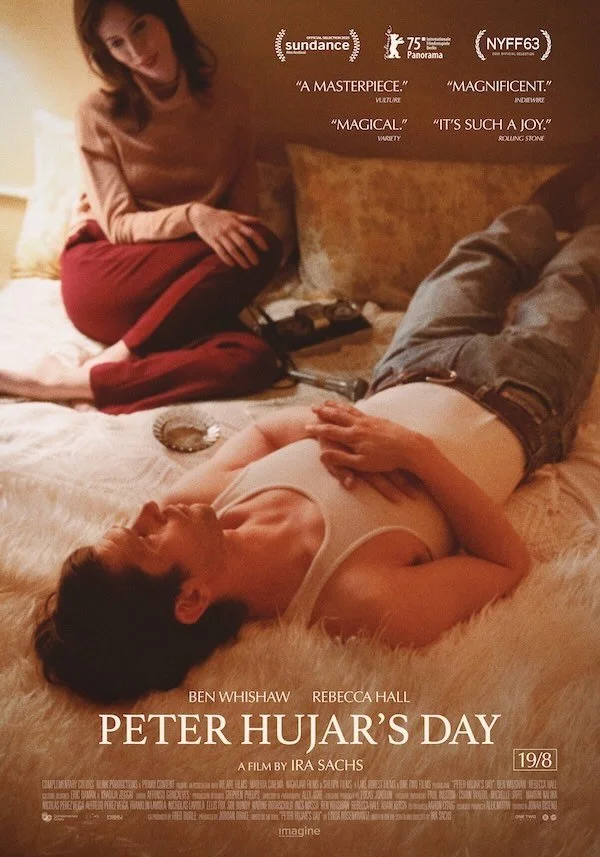
Peter Hujar’s Day
A picture in a picture about the queer photographer that died penniless in NY.
Ira Sachs does not give us a biopic. He reconstructs a single conversation from December 19, 1974, between Peter Hujar and Linda Rosenkrantz. What makes this even more fascinating is that Linda originally intended to create a whole series of such portraits -- Chuck Close and others were meant to follow. Only Hujar's materialized. It still became a book, and now, almost by accident, it has become a film. The result is not a life story. It is a portrait session, in the truest sense.
Here is what makes this film different from any other review you will read: Sachs built it like a photographer. Before shooting, he and cinematographer Alex Ashe spent months in that Westbeth apartment photographing stand-ins at different times of day, in different rooms, under different light. Sachs used those stills as a storyboard, sequencing them to see how they would become the movie. He essentially edited a contact sheet until the film revealed itself. The director himself admits that halfway through this process he realized he was "making a film as much about photography, and portraiture, as anything else."
And it shows. The film is not just about Hujar; it periodically steps outside the 1974 conversation into what Sachs and his editor call "photo shoots" -- moments where the camera simply looks at Ben Whishaw and Rebecca Hall as photographic subjects. These interstitial images ask the same question Hujar's portraits ask: "How do we look, and what do we see?"
The film is honest about being a reconstruction -- it opens with a clapperboard -- but these embedded portraits make it something else: a work that performs photography while it discusses it.
For nearly the entire film, Hujar describes what he did yesterday. Groceries. Phone calls. A cigarette. A photo shoot that did not quite work out. Chasing payments. Meals. It sounds mundane because it is mundane -- and that is exactly the point.
The romantic myth of the artist as a genius struck by sudden lightning dissolves into the daily grind of making art.
Photographers will recognize something other viewers might miss: the endless logistics behind every frame. Haggling with clients, waiting for money, persuading reluctant subjects, hauling equipment, editing contact sheets. The film quietly insists that great photography is built on ordinary days, not extraordinary moments.
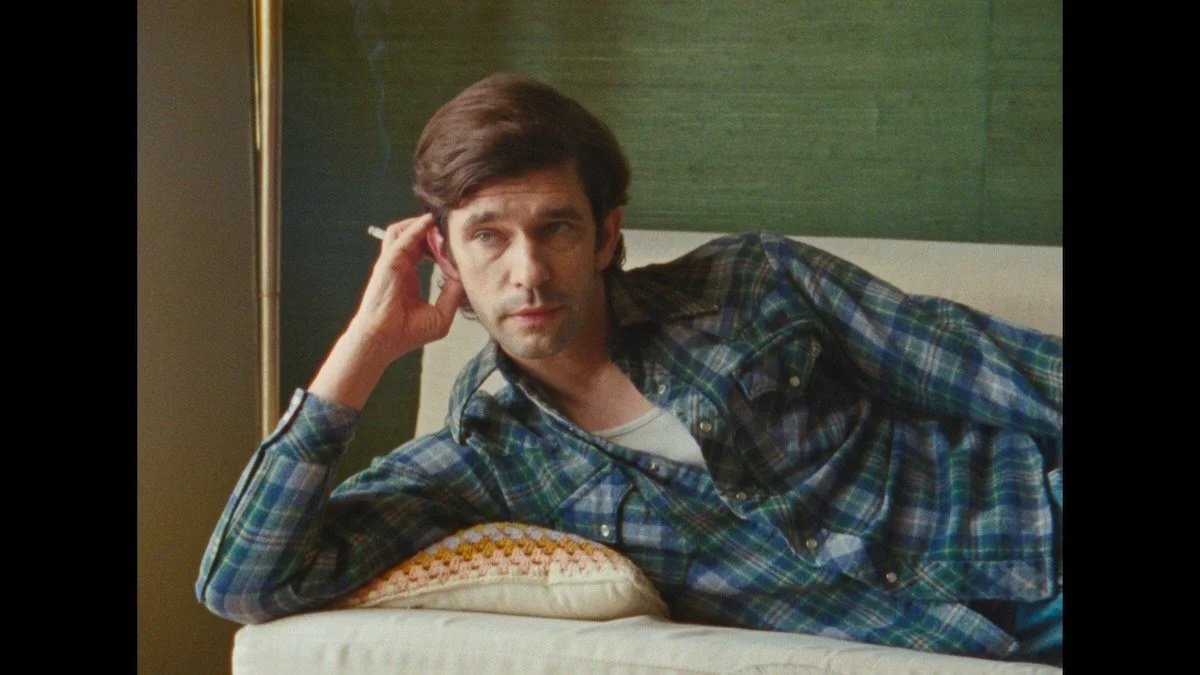
Ben Wisham as Peter Hujar (still from the movie)
“You love photography? Go see this movie”
Ben Whishaw does not play Hujar as an icon. He plays him as a man who hesitates, drifts, corrects himself mid-sentence. Sachs deliberately refused to rehearse the actors -- Whishaw had to learn fifty-five pages of text cold, like a musician learning someone else's improvisation. That unrehearsed, found quality mirrors exactly how Hujar worked with his subjects: you watch, you wait, you catch what is real. It feels like listening to the actual Hujar.
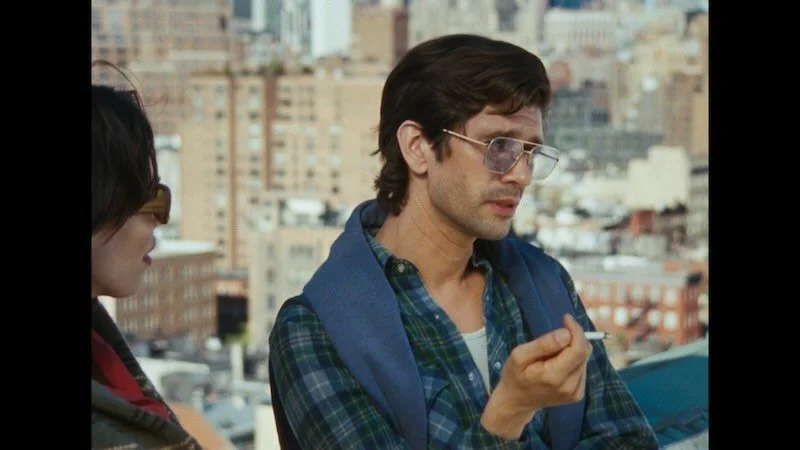
Visually, the film is shot on 16mm with a warm, grainy texture. Long takes, natural light, compositions that echo Hujar's own photographs without ever copying them. Ashe and Sachs were inspired by Godard and Pialat and deliberately pursued an underexposed look -- images that would be "almost too underexposed from a commercial standpoint." They found beauty in the imperfect exposure, in the risk of shadow. For photographers, that is a lesson in itself: trust your darkness.
Peter Hujar's Day asks us to slow down. It argues that a photographer's life is not defined by iconic images but by thousands of small decisions, conversations, frustrations, and observations that make those images possible. In an era obsessed with speed and instant content, Sachs has made a film about the value of looking.
It is not simply a film about Peter Hujar -- it is a film that teaches us how to look.
If this resonates, I am running a masterclass that starts where the film ends. Hujar did not just photograph people; he looked at the world with exceptional intensity. The key lesson for participants is that photography begins long before you lift the camera. That idea runs through the film even though we barely see him photograph.
The Peter Hujar Portrait Masterclass - August 22+29, 2026
Should everyone see this movie?
Are you a photographer yourself? You like portrait photography? Yes, you should definately have visit a nearby cinema to se Peter Hujar’s Day. And when your not into photography but you ever wondered what photographers do? Why a portrait can take time to make, why and how a professional portrait photographer is…. professional…
Yes, do check this film out and let me know what you think about it.
Peter Hujar's Method: A Portrait Masterclass
If this resonates, I am running a portrait masterclass just after the release in Belgium that starts where the film ends.
Hujar did not just photograph people; he looked at the world with exceptional intensity. The key lesson for participants is that photography begins long before you lift the camera. That idea runs through the film even though we barely see him photograph.
As a gesture anyone signing up for the masterclass gets a free movie ticket to see Peter Hujar's Day in Brussels offered by the distributors.
The Peter Hujar Portrait Masterclass - August 22, 2026
Have a look at the trailer down here.
Film still